
If you share a home with a beagle, you've heard it: the long, rising bay that carries through walls and, apparently, through your neighbours' patience. Howling is built into the breed. But it isn't always the same thing, and the fix depends on the reason.
Browse our beagle howling videos to hear the range, then use this guide to work out what yours is saying.
It's the job description
The beagle is a British pack hound bred to follow a hare's scent. The WSAVA's breed profile notes that hunting drive is present in every beagle. Hounds on a trail use their voices to tell the pack and the hunter where the quarry is. A pet beagle that bays at a smell in the garden is doing exactly what the breed was selected to do.
That means you can reduce howling, but you won't remove a trait that is part of the breed. Aim for "manageable", not "silent".
Six common reasons
1. Following a scent. The classic bay. It happens outdoors or at a window and usually stops when the trail goes cold.
2. Reacting to sounds. Sirens, other dogs, and certain high-pitched noises set many dogs off. It typically ends when the sound does.
3. Loneliness or separation anxiety. Beagles are pack dogs, and the WSAVA says isolation may increase problem behaviour. If your dog howls mainly when you're out, other signs often join in: pacing, drooling, panting, destructive chewing around doors and windows, or accidents in a house-trained dog (ASPCA and AKC list these).
4. Boredom. An under-exercised, under-stimulated hound makes its own entertainment.
5. Attention-seeking. If howling has ever made someone come running, it works, so it continues.
6. Pain or illness. A sudden change, or howling that comes with other signs, is a reason to call the vet before you start training. In a young beagle, sudden severe neck pain with a stiff gait and fever should be examined quickly (see SRMA in our health guide). Hearing loss in older dogs can also make them louder.
First, work out which one it is
For a week, note when it happens:
- Only when you leave? Think separation anxiety.
- At a particular sound or sight? Think trigger or alert.
- Outdoors with nose down? Scent.
- In the evening when the house is quiet and nothing has happened? Think unmet exercise and mental needs.
- New and unusual? Rule out a medical cause.
A short phone video of the household while you're out is one of the most useful things you can show a trainer or vet.
What helps
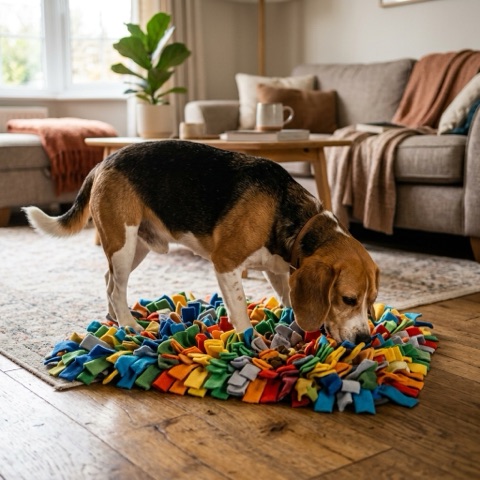 For scent and boredom
- Give the nose a job: scatter-feed, use snuffle mats, hide treats around the house, or try a simple "find it" game. Scent work tires a beagle faster than another lap of the block.
- Increase sniffing time on walks. Let your dog lead with its nose for part of each outing rather than marching it along.
For attention-seeking
- If you know your dog is safe and not distressed, don't reward the howl with eye contact, talk, or treats. Reward the quiet that follows.
- Teach a "quiet" cue: mark and reward the moment the howling stops, then gradually ask for a slightly longer pause before the reward. This takes weeks, not days.
For sound triggers
- Reduce exposure (close curtains, play background noise) and pair the trigger with treats at a level where your dog stays relaxed.
For separation anxiety
- This is not stubbornness and it can't be fixed by ignoring it or punishing it. The standard approach (ASPCA, AKC, VCA) is gradual desensitisation: many short absences your dog can cope with, lengthened slowly over weeks, backing up whenever you see stress signs such as panting, pacing, or trembling.
- Practise departure cues (keys, coat, shoes) without actually leaving.
- If your dog gets worse rather than better, or the distress is intense, ask your vet for a referral to a board-certified veterinary behaviourist or a certified applied animal behaviourist. Medication is sometimes added alongside behaviour work.
- Crates calm some dogs and stress others.
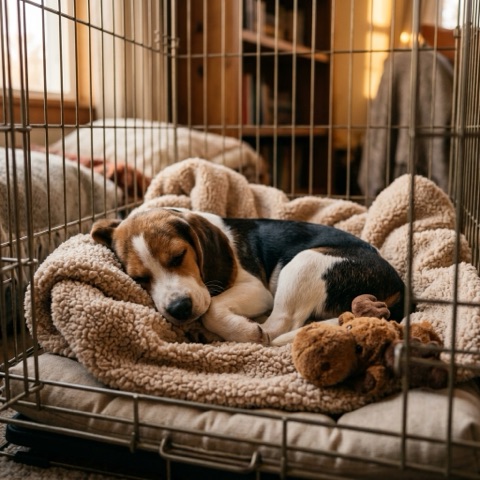 For puppies
- Crying and howling in the first nights at a new home is normal and usually fades over days to a couple of weeks. A snug crate or pen, a calm bedtime routine, a last toilet break, and proximity to you at first (moved gradually away) help. Don't punish a puppy for crying. See our puppy videos.
What doesn't help
- Shouting. To a hound, more noise from you looks like joining in.
- Punishment or shock devices. They can make anxiety worse and don't address the cause.
- Debarking surgery or giving up. Talk to your vet or a trainer instead.
Being a good neighbour
Tell neighbours you're working on it, and consider a white-noise machine or a room away from shared walls for times when you're out. Most people tolerate a problem they know is being managed far better than one they hear about with no explanation.
Frequently asked questions
Why does my beagle howl at sirens? Many dogs respond to high-pitched sounds. It's normally harmless and ends when the siren stops.
Do beagles howl or bark more? They do both. Baying is a hallmark of the breed and is often louder and longer than a typical bark.
Will my beagle grow out of howling? Rarely. Most trainers say frequent howlers can be trained to do it much less, but not to stop entirely.
Why does my beagle howl when I leave? It may be separation anxiety. If it only happens when you're gone, treat it as that and seek professional guidance if it's severe.
Should I get a second dog? Some dogs find company calming, but it doesn't fix separation anxiety for all, and it doubles the workload. Address the behaviour first.
General information, not veterinary or behavioural advice for your dog.
Sources
- WSAVA, "Meet the Beagle": https://wsava.org/updates/meet-the-beagle-update-your-knowledge/
- ASPCA, Separation Anxiety: https://www.aspca.org/pet-care/dog-care/common-dog-behavior-issues/separation-anxiety
- AKC, Separation Anxiety in Dogs: https://www.akc.org/expert-advice/health/separation-anxiety-dogs/
- VCA Animal Hospitals, Separation Anxiety in Dogs: https://vcahospitals.com/know-your-pet/dog-behavior-problems---separation-anxiety-in-dogs---synopsis
- Dogster, Hepper, and Kinship breed behaviour guides on howling triggers and "quiet" cue training
- Bella+Duke (Positive Steps Dog Training), How to stop your puppy crying at night